ACTG 4110 · Advanced Financial Accounting · Chapter 6

Variable Interest Entities, Intra-Entity Debt, Consolidated Cash Flows, and Other Issues

Chapter 6 leans on topics from Intermediate Accounting: bonds, preferred stock, the statement of cash flows, and earnings per share. Start with the Foundations video for a topic, then work the homework questions that use it.

Suggested order

  1. Intra-Entity Debt (7 min) → then Q1, Q4 and Q5
  2. Subsidiary Preferred Stock (10 min) → then Q2 and Q5
  3. Consolidated Cash Flows (9 min) → then Q3 and Q6
  4. Consolidated EPS (9 min)
  5. Subsidiary Stock Transactions (8 min)

About 44 min of Foundations in total.

Five short videos with made-up numbers. Each one rebuilds an Intermediate Accounting topic from scratch, then shows where Chapter 6 uses it.

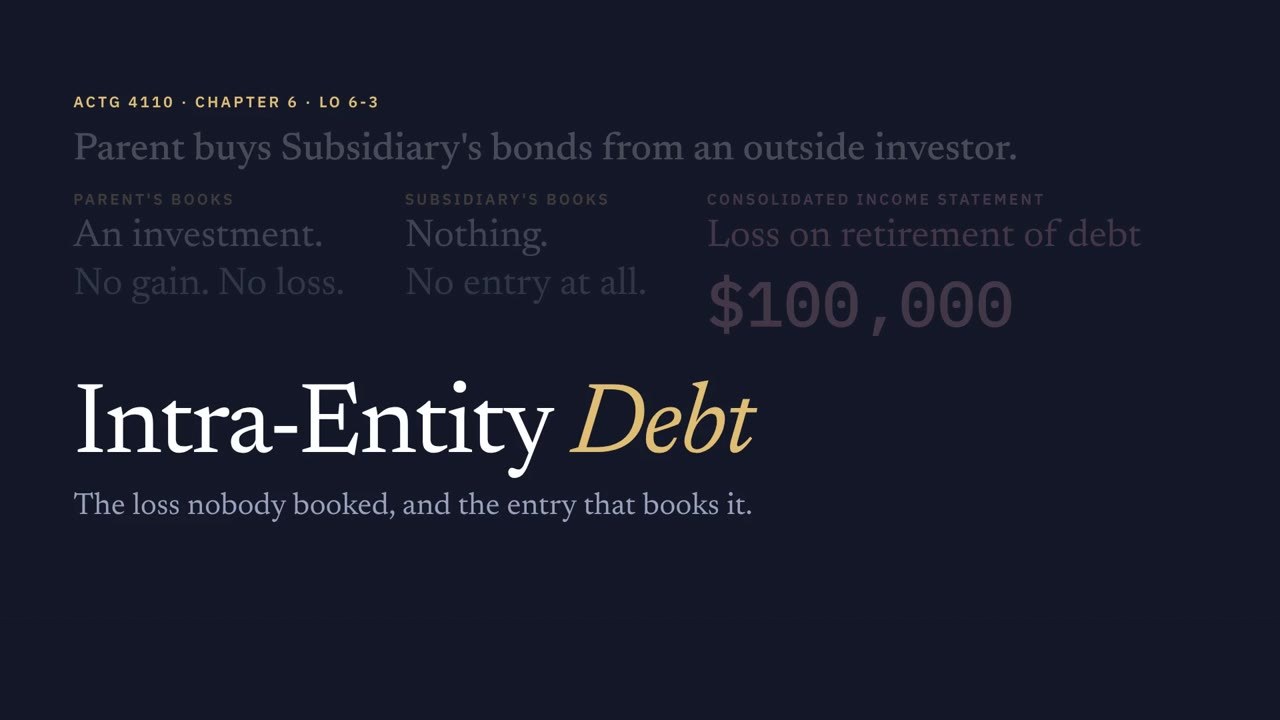
  1. Intra-Entity Debt: the loss nobody booked

    A quick bond refresher (carrying value and effective interest), then what happens when one company in a group buys the other's bonds from an outsider: the gain or loss nobody booked, Entry B, and Entry *B the year after.

    7 minPublic

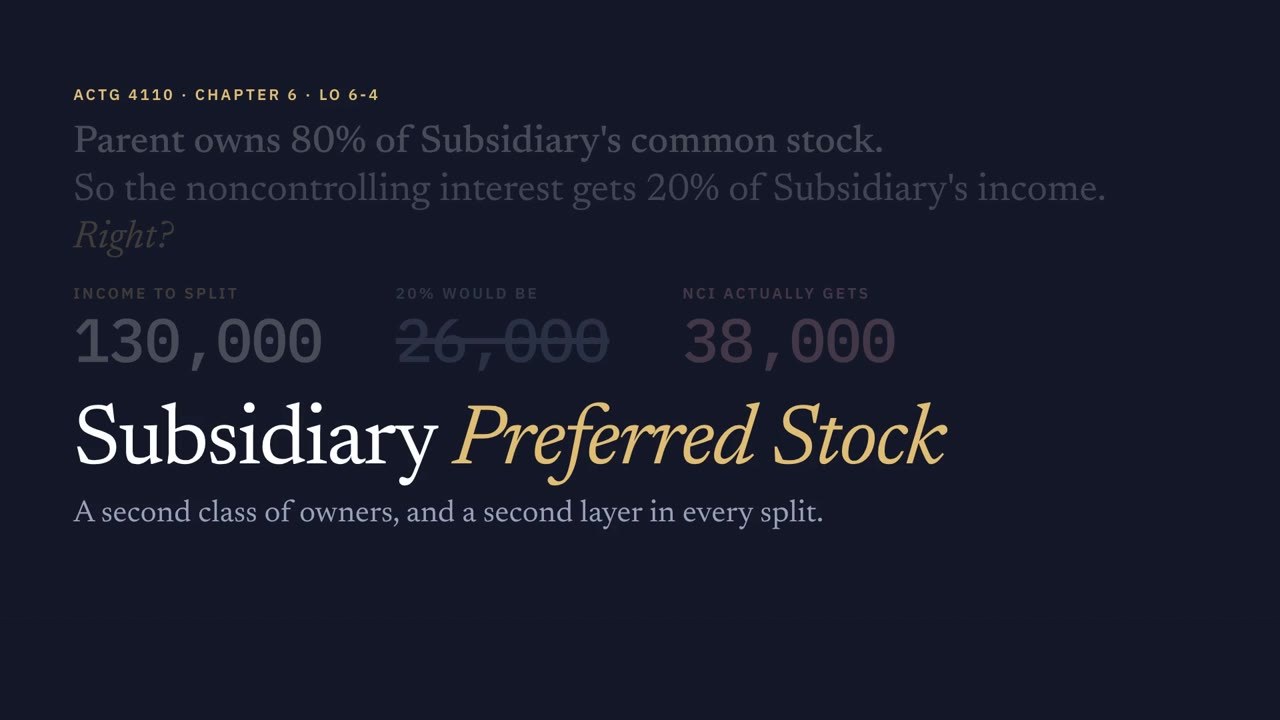
  2. Subsidiary Preferred Stock: a second layer in every split

    Why preferred stock gets paid first, how cumulative dividends and arrears work, and how a subsidiary's preferred shares held by outsiders become part of the noncontrolling interest.

    10 minPublic

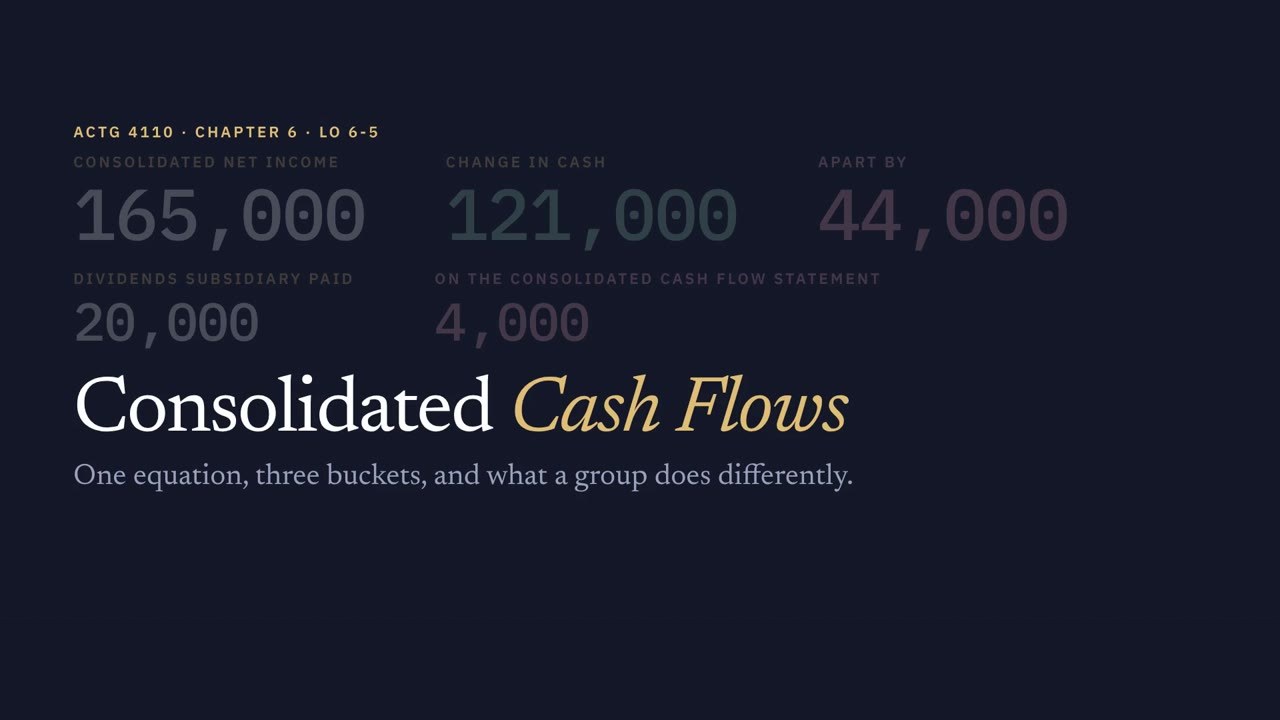
  3. Consolidated Cash Flows: one equation, three buckets

    Why income isn't cash, the indirect method built from one equation, and the few things that change when the statement covers a whole group: consolidated net income, subsidiary dividends, and the acquisition year.

    9 minPublic

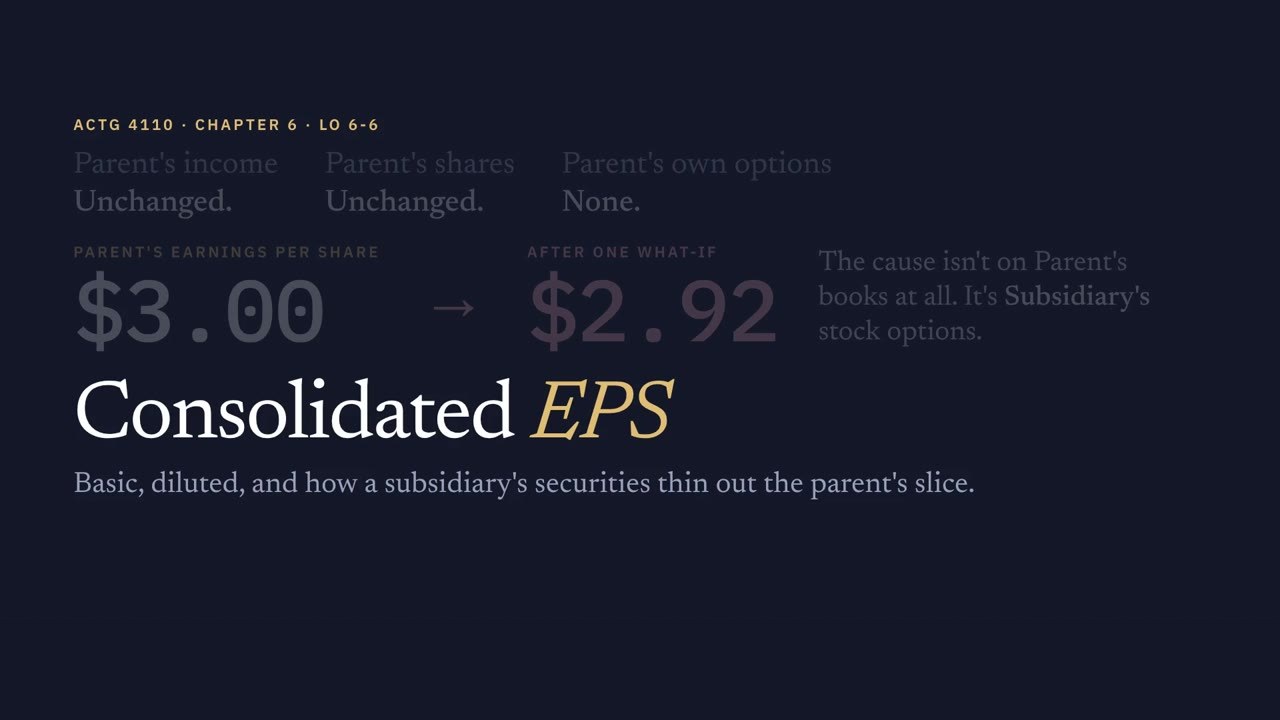
  4. Consolidated EPS: the subsidiary thins the parent's slice

    Basic EPS, the treasury stock and if-converted methods, the antidilution test, and how a subsidiary's options and convertible securities thin the parent's slice of consolidated EPS.

    9 minPublic

  5. Subsidiary Stock Transactions: never a gain

    What happens when a subsidiary issues or buys back its own shares: why it is never a gain or loss for the group, and how the parent adjusts its investment and additional paid-in capital.
    8 minPublic

The six Connect problems, worked one step at a time. Ask a classmate for the password.

  1. Q1 · Highlight and Kiort: bonds on the income statement

    Bonds bought back through the parent: two interest amounts, a loss on retirement, and the consolidated income statement.

    5 minClass password

  2. Q2 · Haried and Yun: preferred stock is the NCI

    Preferred stock left with outsiders: NCI's share of income, the Investment account under the equity method, and the four entries.

    5 minClass password

  3. Q3 · Alford and Knight: operating cash flows

    Build consolidated net income, then adjust it to operating cash flows.

    5 minClass password

  4. Q4 · Paiton and Sandra: the whole worksheet

    The whole worksheet: upstream inventory, downstream land, intra-entity bonds, NCI income and balance, and next year's Entry *B.

    12 minClass password

  5. Q5 · Mona and Lisa: stock, bonds and fixed assets

    Common and preferred stock, half of the subsidiary's bonds, a fixed-asset transfer, and four consolidated balances two years later.

    8 minClass password

  6. Q6 · Bolero and Rivera: the statement of cash flows

    A full consolidated statement of cash flows, indirect method, from two years of consolidated statements.

    6 minClass password